
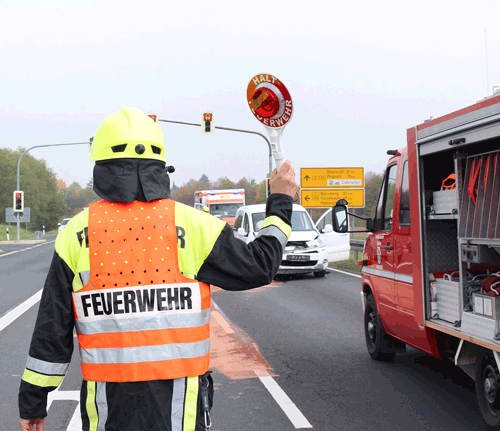
Digital aids for emergency services – basic high voltage competence (ev) high voltage training at level 1E or level 1S) is of course a prerequisite. Due to the growing number of electric and hybrid vehicles on the roads, emergency services must also adapt to new challenges. The (ev) high voltage systems in electric cars can pose potentially life-threatening risks for rescue workers in the event of an accident – it is therefore important that they also receive high voltage training, and rescuers must therefore adhere to safety rules so as not to be exposed to any hazards. An important tool is the digitally available rescue card, which must be available for every electric vehicle to provide information on the location and routing of (ev) high voltage cables and components in the vehicle type. An instructed person from the rescue services who has attended a small high-voltage training course can safely assess which protective measures and precautions need to be taken in order to rescue people or safely extinguish a burning electric car and keep it under control. Even if the danger generally comes from the high-voltage batteries, we recommend that rescuers choose a high-voltage training course in vehicle technology, as they are usually dealing with the vehicle as such and not with the individual batteries.
Safe control of electrical hazards during rescue
(ev) high voltage training and instruction of rescue personnel ensures that rescue operations are carried out without endangering the rescue personnel themselves and that the appropriate measures are initiated quickly at the scene of the accident. All (ev) high voltage components in an electric car can be identified by clear markings and the orange coloring. And the cutting tools and spreading tools used by the fire department at the scene of an accident for vehicles with conventional drive systems can also be used for electric cars. The procedure for rescuing people from an electrically powered vehicle is basically similar to that used on vehicles with a combustion engine. Nevertheless, special precautions must be taken when working on electric cars involved in accidents in order to minimize the risks to rescue personnel.
Electrical engineering knowledge helps to save lives and protect the emergency services
Thanks to the digital rescue maps, emergency services know where high-voltage components are positioned in the vehicle, where high-voltage cables run and how they can use their tools safely. Depending on the manufacturer, many electric vehicles are equipped with an interlock circuit as a control circuit, which interrupts the circuit in the high-voltage system in the event of a serious accident. This technology helps to increase safety for emergency services. Nevertheless, rescuers need to exercise caution, as the electrical condition of the (ev) high voltage system cannot be reliably assessed in the event of a serious accident due to the high dynamic forces and deformations. This highlights the value of specialist high voltage (ev) training (DGUV I 209-093 Level 1S or Level 1E), as the safe rescue of people from electric cars can only be guaranteed if personnel have sufficient technical expertise.
PS: Rescue data sheets are freely accessible and can be downloaded from https://www.vda.de/de/themen/sicherheit-und-standards/retten-und-bergen/rettungsdatenblaetter.html.
Are you looking for a suitable (ev) high voltage qualification for your team? All courses such as the “Specialist high voltage (ev)” course mentioned above or the short course to become a specialist high voltage (ev) instructed person. More information on this can be found on our homepage www.tcs-engineering.de We offer various open seminars as well as customized in-house seminars. customized in-house seminars in-house seminars.
Our free(REALLY free, even WITHOUT having to provide an email address!) paper “6 things you need to know in advance about the high-voltage qualification of your employees” is available here (click).









Leave A Comment