

These days, even lay persons are hearing the term “(ev) high voltage” more and more often—especially in connection with electric vehicles.
As someone whose work involves (ev) high voltage technology and related training, I’ve been asked this question several times:
“You’re the one who does those high-voltage training courses—wasn’t that called ‘high voltage’ back in the day?”
The short answer is: No.
But since that alone is hardly satisfying, here’s a slightly longer—and hopefully clearer—explanation.
Two Terms—Two Worlds: (ev) high voltage and high voltage
“High voltage” is a term from classical electrical engineering, as defined in VDE standards for decades.
Here, a distinction is made between various voltage levels:
- Low voltage: up to 50 V AC or 120 V DC
- Low voltage: up to 1,000 V AC or 1,500 V DC
- Medium voltage: up to about 52 kV
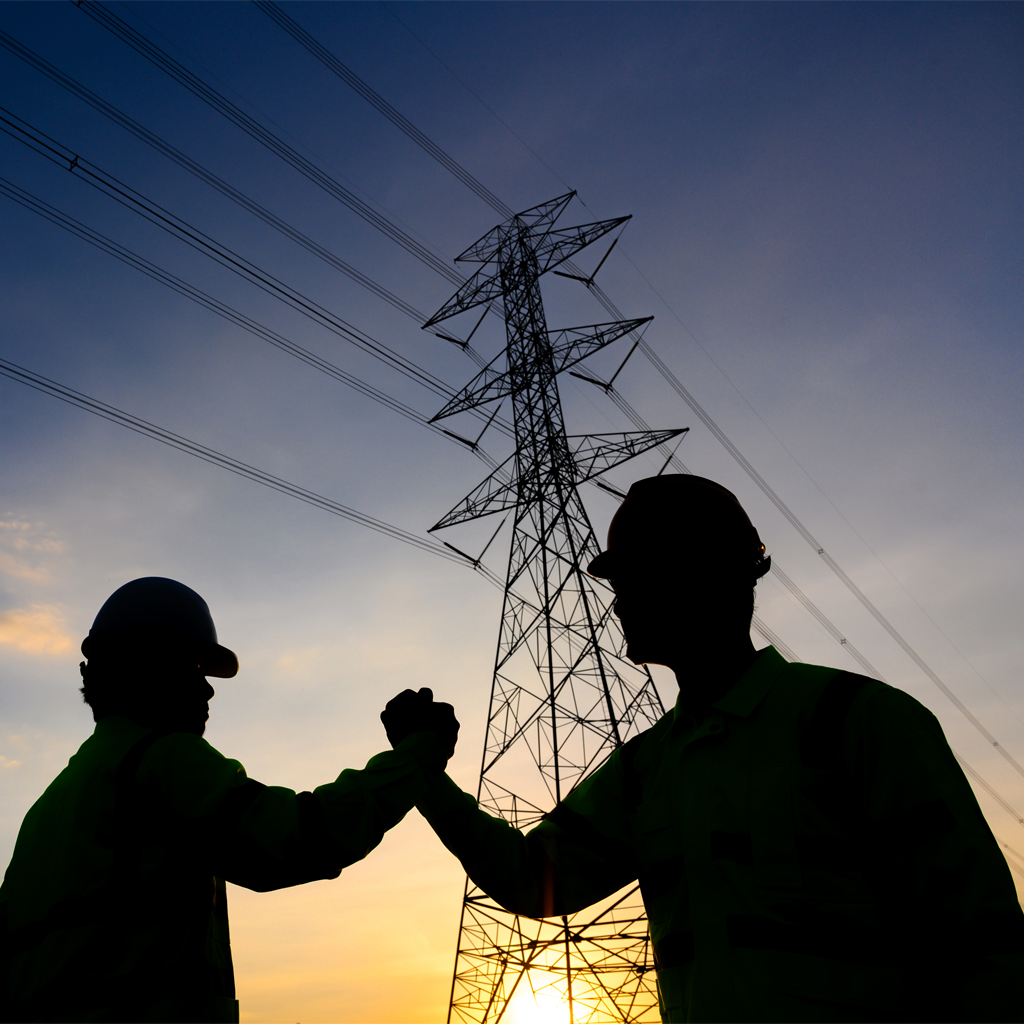
- High voltage: usually 110 kV
- Highest voltage: 220 kV, 380 kV, or 400 kV
- Ultra-high voltage: e.g., 1,200 kV (not common in Europe)
Strictly speaking, extra-low voltage is a subset of low voltage, but it is referred to separately for the sake of clarity; and everything above low voltage constitutes the general high-voltage category according to VDE 0101.
(ev) high voltage, on the other hand, comes from the field of automotive engineering. The term describes the voltage range of
- over 30 V up to 1,000 V for alternating current (AC)
- Over 60 V up to 1,500 V for direct current (DC)
This means that (ev) high voltage actually falls within the low-voltage range —even though that may sound counterintuitive to many people.
Why “low voltage” is dangerous, even though the term may seem harmless to the lay person
The term “low voltage” sounds harmless—but it certainly isn’t.
Everything that uses electricity—whether at home, in the office, or in the workshop—falls into this category. And:
Even 230 volts can be deadly.
Anything up to 1,000 V AC or 1,500 V DC is, in effect, low voltage! The Low-Voltage Directive is therefore one of the most important European safety directives of all.
And anyone who works with high-voltage systems is operating right in the middle of this range, usually well above the low voltage from a wall outlet— far from harmless.
What “(ev) high voltage” Really Means
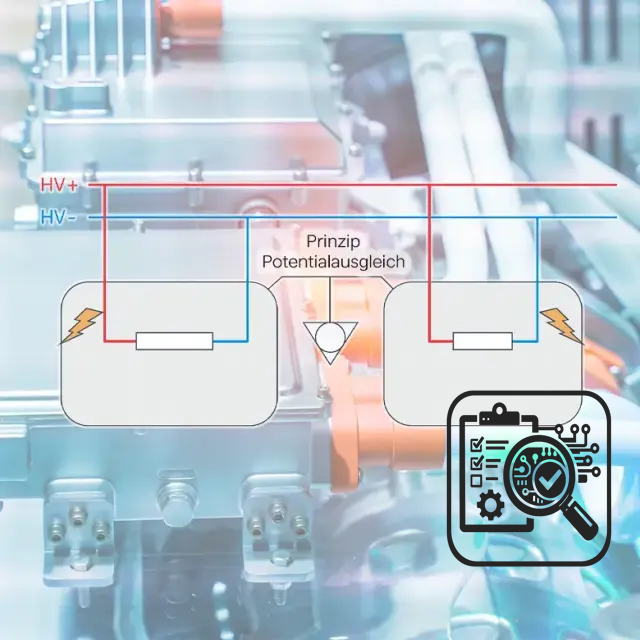
Today, “ev” high voltage has come to symbolize electric powertrains in vehicles—and the special care they require.
Typical voltages are 400 V or 800 V.
By comparison, a car’s electrical system operates at 12 V or 24 V, while modern systems sometimes run at 48 V.
This also explains why the term “low voltage” would be inappropriate in the automotive context:
It falsely gives the impression that it is “harmless.”
“(ev) high voltage,” on the other hand, rightly indicates that special expertise is required here.
Safety Through Qualifications
Working with high-voltage systems requires not only technical knowledge but also qualifications mandated by law.
These include, for example:
- Certified Specialist for High-Voltage Systems in SHV
- Expert in High-Voltage Systems for Battery Technology
- High-Voltage Systems Electrical Specialist
- LLW on high-voltage batteries
These training courses, based on DGUV I 209-093, provide the knowledge needed to safely test, maintain, or dismantle systems with (ev) high voltage.
(ev) high voltage can be very dangerous—especially in battery technology, where high power levels can lead to electrical arcs.
FAQ: (ev) high voltage vs. High Voltage
Which is more dangerous—(ev) high voltage or high current?
Both can be life-threatening. High voltage (100 kV and above) primarily affects power distribution networks. (ev) high voltage (up to 1,000 V AC) is below that threshold but is still potentially lethal in the automotive sector.
Is there (ev) high voltage in the home?
No. In the home, we’re dealing with low voltage (230 V). (ev) high voltage is found in electric vehicles and industrial HV systems.
Why is it called “(ev) high voltage” and not “high potential”?
Because the term originates from automotive engineering and was deliberately distinguished from traditional power engineering. “(ev) high voltage” refers to the low-voltage range relevant to vehicles, up to 1,000 V AC or 1,500 V DC.
Do I need training to work with (ev) high voltage?
Yes. Depending on the job, training in accordance with DGUV Information 209-093 or other qualifications is mandatory.
Is it safe to touch components with (ev) high voltage when the system is turned off?
Only if you are certain that it is de-energized—and have received the appropriate training. (ev) high voltage components can store residual energy.
Conclusion
“Hochvolt” is not the same as “Hochspannung” —and this is not merely a linguistic difference.
While “Hochspannung” refers to high voltage in power grids, “(ev) high voltage” refers to the voltage range of modern electric vehicles.
Both areas are dangerous, but only one affects the day-to-day work of repair shops, developers, and technicians.
Anyone working in this field needs one thing above all else: the right qualifications.
Anyone who works with high-voltage systems bears responsibility for the safety of people, the environment, and operations. Solid training—such as the TCS specialist high voltage (ev) program — is the first step toward achieving this.
PS: Our recommendation: Our free(REALLY free, even WITHOUT having to provide an email address!) paper “6 things you need to know in advance about the high-voltage qualification of your employees” is available here (click).









Leave A Comment