
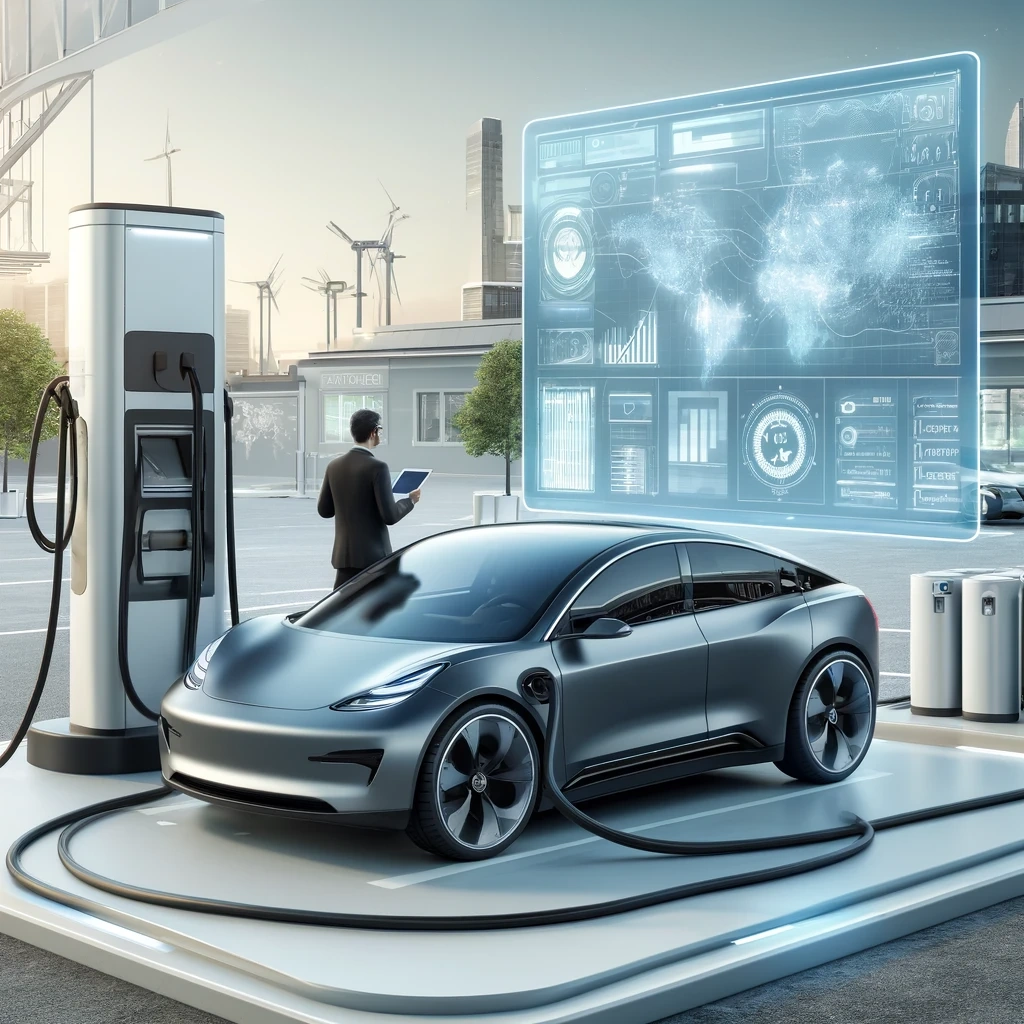
Electric cars with powerful (ev) high voltage batteries are not only advertised by manufacturers with high capacities and ranges, but also with the “fast charging function“. Both are very important for the consumer; I don’t spend more than 10 minutes at the filling station, so the idea of being able to recharge my HV (ev) batteries as quickly as possible is quite obvious – especially considering the range of an (ev) high voltage vehicle.
And that is actually the case, when you are on the road, you prefer to charge your e-vehicle quickly; you often even pay for the charging time and not for the energy at the public charging stations.
Secondly, physics cannot be avoided; during fast charging, a significantly higher proportion of the energy is converted into heat instead of actually charging the battery, which means that – even if it is faster – an excessive amount of electricity is required. Studies show that the (ev) high voltage fast charging process is tuned in such a way that the battery can handle it, but according to studies, it ages the battery around 17% faster. Added to this is the higher power consumption during fast charging, not only because of the heating but also because of the active cooling. If you park your electric car in the garage in the evening to drive off again in the morning, you should not charge it quickly. This is good for both the battery and your wallet. However, this is not a problem for most people in practice anyway, as they do not charge at home with a high-voltage DC fast charging system, but usually with 11 kW or 22 kW three-phase alternating current from the wallbox. Especially with the 11 kW wallboxes, there is hardly any effect on the ageing of an (ev) high voltage battery in the vehicle. This is definitely not fast charging of an (ev) high voltage battery in the vehicle! Fast charging is charging with high power at the DC charging station.
Conclusion: Fast charging is therefore very sensible and the right thing to do if you have long distances ahead of you or have to travel very quickly, so don’t worry that regular fast charging will damage your vehicle. If you don’t have the time or don’t have much distance to cover, it makes sense to avoid it; for the environment, for the life of your vehicle and for your wallet, I always charge slowly overnight at home.
Are you looking for a suitable (ev) high voltage qualification for your team? All courses such as the “Specialist high voltage (ev)” course mentioned above or the short course to become a specialist high voltage (ev) instructed person. More information on this can be found on our homepage www.tcs-engineering.de We offer various open seminars as well as customized in-house seminars. customized in-house seminars in-house seminars.
Our free(REALLY free, even WITHOUT having to provide an email address!) paper “6 things you need to know in advance about the high-voltage qualification of your employees” is available here (click).












Leave A Comment