

Getting an electric shock can be dangerous, something that every electrical specialist, every expert in (ev) high voltage and most lay persons are well aware of. But are there differences between men and women?
Most of the factors that influence the severity of an electrical accident are not directly gender-specific. An externally applied current also endangers different bodily functions, whereby the degree of danger depends on factors such as the type and strength of the current, contact surface, nature of the contact surface (skin), voltage, duration of exposure and the current path through the body. However, we now know that women and men react differently to electric shocks! In women, muscle cramps can occur at six milliamperes, while men have a threshold of nine to ten milliamperes. This can, for example, affect the release threshold, i.e. the point at which a person can no longer let go, which in turn means a higher risk!
Men, on the other hand, have more cardiovascular risk factors and more existing cardiovascular diseases than women, which are of course also relevant in the event of an electric shock. From a current strength of approx. 30 mA, the heart rhythm is impaired and can be fatal, especially if the current flows through the heart and thus causes ventricular fibrillation.
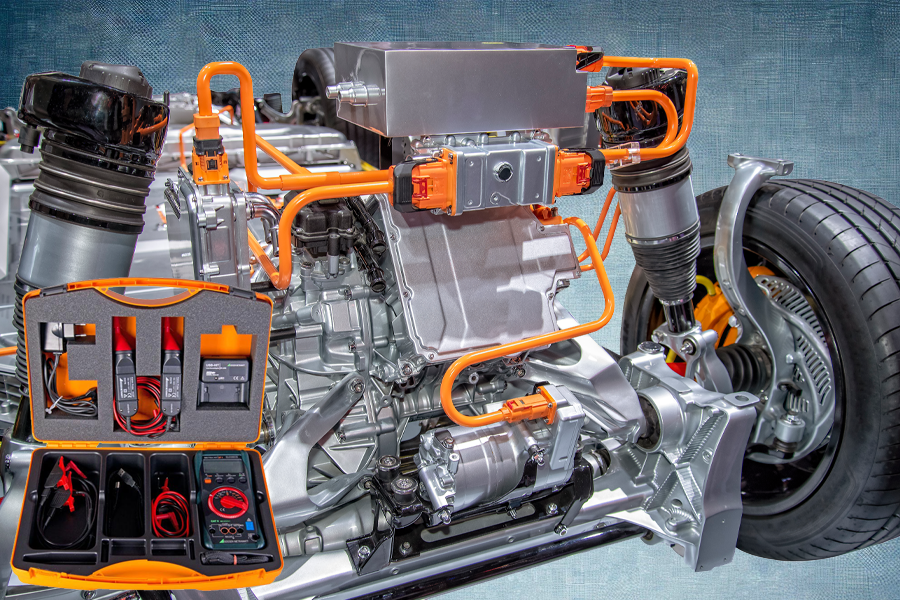
In addition to the type of current (AC/DC), the current intensity flowing through the body is of central importance. This usually results from the body resistance and the contact voltage. In the case of high voltage, this is over 30 V up to a maximum of 1000 V for AC voltage and over 60 V up to a maximum of 1500 V for DC voltage – for example on a high-voltage battery.
However, most of the factors are (to our knowledge) not gender-specific, some are very individual. The condition of the skin plays an important role as a transitional resistance. There may be gender-related factors, but activity, age and care play a more important role here. However, nobody “plans” to touch the voltage of a high-voltage system, it is only a risk factor if it happens.
The phrase “as far as is known” was used relatively frequently in this article. This is due less to the voltage factor (in the case of high voltage) and more to the fact that, to our own shame as a society, far too little research has been done into the medical differences between men and women. In medicine at least, men are simpler and therefore more suitable test subjects. The unfortunate negative consequence of this is that general medicine pays too little attention to women. The DGesGM, for example, is working on this (link).
In the high-voltage sector, as in most areas of electrical engineering, women have so far been underrepresented among electrical specialists. Our female (ev) high voltage trainers are currently an exception.
We wish all women (and men, today on March 8) in the field of (ev) high voltage and electrical engineering safe work at all times!
Our goal in every single high-voltage training course is simple: we want every person who has completed an HV (ev) qualification with us to be able to work safely on HV systems, taking care of the safety of themselves and their colleagues.
We offer all high-voltage courses, such as the aforementioned “Specialist high voltage (ev)” course (level 2S/ level 2E) or the short course to become a “Specialist high voltage (ev) instructed person” (level 1S/ level 1E). More information on this can be found on our homepage www.tcs-engineering.de In addition to a number of open seminars, we also offer customer-specific in-house seminars: Your high-voltage training from us for you!









Leave A Comment